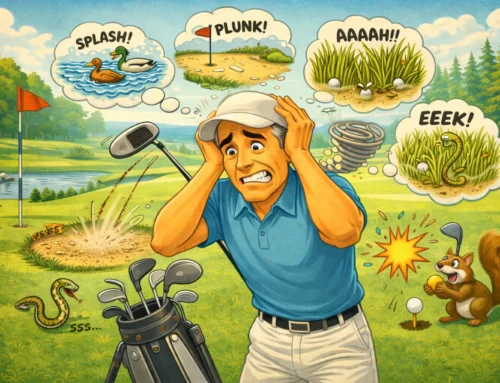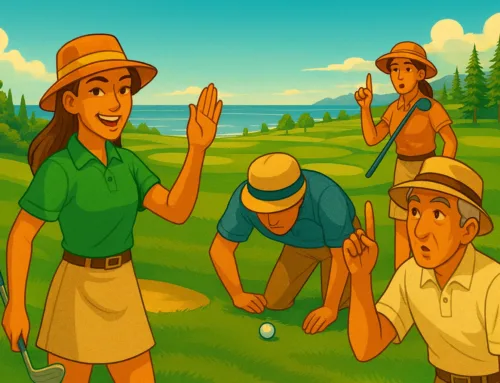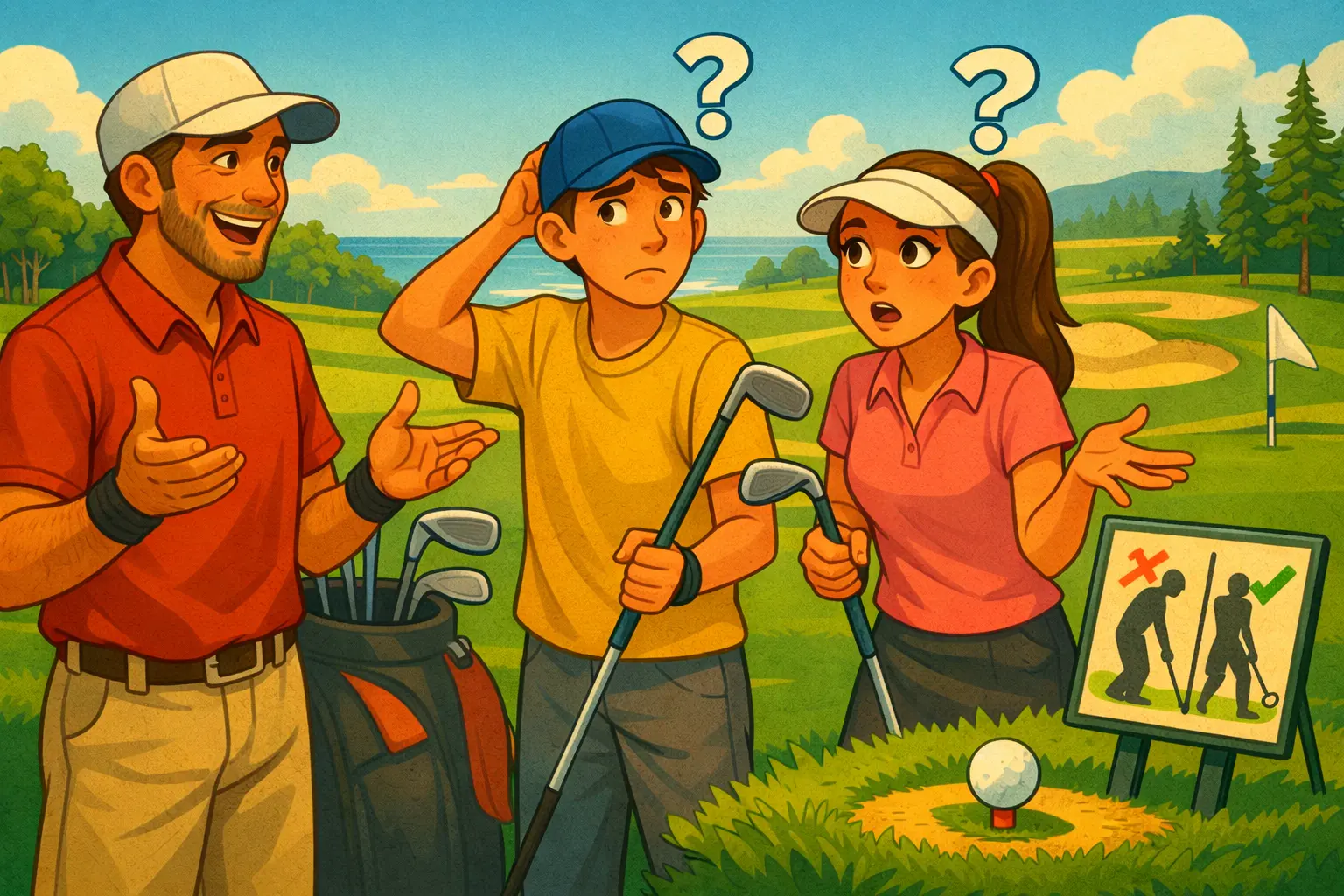
The “Normal” Way to Learn Golf
And Why It Often Feels Like Paying to Be Confused
Most golfers don’t start golf the way they start, say, driving a car or learning a language.
When you learn to drive, you’re not handed a steering wheel and told: “Just… vibe with it.” You get rules, structure, and a clear reason for what you’re doing.
Golf, on the other hand? Golf often starts with a green card course… and ends with you standing on a driving range holding a 7-iron like it’s a mildly suspicious object, while someone says:
“Okay, just swing.”
And that, my friend, is how many golfers begin their journey into a sport they love… while also feeling slightly lost for the next 3–10 years.
Table of Contents
- The Standard Learning Path: Green Card → 7-Iron → “Just Swing”
- Step 1: The Green Card Course (AKA “Golf Bootcamp Lite”)
- Step 2: Grab a 7-Iron and Swing (With Very Limited Instructions)
- Step 3: The Lesson Hours Add Up… and So Does the Price
- Why This Feels Hard: You’re Missing the “Why”
- Common Signs You’re Learning the Normal Way
- A More Structured Way to Learn (Without Killing the Fun)
- Takeaway: Golf Gets Easier When It Makes Sense
The Standard Learning Path: Green Card → 7-Iron → “Just Swing.”
Let’s be fair: the traditional route exists for a reason. It’s accessible, it’s common, and it gets you onto the course quickly.
But it also has a few “features” that can make beginners feel like they’re constantly behind, even when they’re doing their best.
The usual path looks like this:
- You take a green card course (rules, etiquette, basics).
- You get your first proper lesson and you’re handed a 7-iron.
- You’re told to swing with a few quick tips (often very technical).
- You practice a bit—mostly guessing what you should focus on.
- You book more lessons because you’re not sure why things aren’t sticking.
“I’m taking lessons… but I still don’t really know what I’m supposed to do.”
If that sentence feels familiar, welcome to the club. (Golf has many clubs. Too many clubs, arguably.)
Step 1: The Green Card Course (AKA “Golf Bootcamp Lite”)
The green card course is usually your first official entry point into golf. And honestly: it’s a great idea.
You typically learn:
- basic rules and etiquette
- safety on the course
- how a round works
- some fundamentals (grip, stance, posture)
- a little putting and short game
But here’s the sneaky thing:
The green card course often teaches you how to be on a golf course… not how to play golf well.
And that’s not a criticism—just reality. It’s a starter course. It gets you from “complete beginner” to “allowed to play.”
What many golfers don’t get at this stage is a clear plan for what happens next.
Step 2: Grab a 7-Iron and Swing (With Very Limited Instructions)
Then comes the classic moment.
You book a lesson. You’re motivated. You’re ready. You arrive early. You even stretch (which is suspiciously athletic behavior for a new golfer).
The trainer smiles, hands you a 7-iron, and says something like:
“Okay, hit a few balls and I’ll have a look.”
So you swing.
You slice one, top one, chunk one, accidentally hit one pure (and immediately believe you’re basically Rory McIlroy now), then slice three more.
Then you get feedback. Usually, a handful of tips like:
- “Keep your left arm straight.”
- “Don’t lift your head.”
- “Rotate more.”
- “Shift your weight.”
- “Tempo.”
All of which can be correct… but also feel like being told to “just be taller” when you’re 172 cm.
Why the 7-Iron?
The 7-iron is the “default beginner club” because it’s easier to hit than longer irons and less chaotic than a driver. It’s a sensible choice.
But here’s the problem:
If you don’t understand what the swing is trying to do, a 7-iron becomes an expensive metal stick you apologize to.
Many beginners leave the lesson with a few adjustments… but without a mental map.
And without a mental map, practice becomes guesswork. Because you don’t learn much about how to play golf.
Step 3: The Lesson Hours Add Up… and So Does the Price
What happens next is predictable:
- You try to remember what the coach said.
- You practice a bit.
- You’re not sure what to prioritize.
- You fall back into old habits (because habits are loyal like that).
- You book another lesson.
And slowly, the hours stack up.
Then the costs stack up.
And the most frustrating part is this: you may still feel uncertain about what you’re doing and why.
Golf lessons can become a cycle: “Fix one thing, survive a week, then fix the next thing.”
It’s not that the trainer is bad
To be clear: many golf coaches are excellent. Skilled, experienced, and genuinely helpful.
The issue is often the learning format—not the person.
A lot of coaching is built around what the coach sees in the moment. That’s useful. But it can also create “random” learning:
- Today: grip
- Next week: backswing
- Week after: hip rotation
- Then: “We should talk about your driver” (uh oh)
It can feel like building a house by repainting one wall at a time before you’ve laid the foundation.
Why This Feels Hard: You’re Missing the “Why”
Beginners don’t just need tips. They need understanding.
Because golf is not one skill—it’s a system of skills. And without context, golf instruction can sound like magic spells:
“Keep your wrist angles.”
“Shallow the club.”
“Stay connected.”
Helpful? Potentially.
Confusing? Absolutely.
What beginners often don’t get early enough
- What impact actually is (and why it matters more than your backswing style)
- What the club is supposed to do through the ball
- Why the ball curves (and how to reduce it without 47 swing thoughts)
- What “good contact” feels like and how to train it
- How to practice so your range time translates to the course
So you end up with effort… but not always progress.
Common Signs You’re Learning the Normal Way
If you recognize a few of these, you’re not alone:
- You have lots of tips, but no clear priority.
- You “lose your swing” regularly (like it’s hiding behind a tree).
- You feel okay on the range… then panic on the first tee.
- You can’t explain what went wrong—only that it felt “off.”
- You practice often, but you’re not sure what you’re actually training.
“I’m doing the work… I just don’t know what the work should be.”
A More Structured Way to Learn (Without Killing the Fun)
Golf should still be fun. Nobody wants a 47-page manual just to hit a ball forward.
But a little structure early on can save you a lot of time, money, and frustration.
What “structure” can look like
Instead of only doing random fixes, you build a simple learning path:
- Step 1: Learn what creates a straight shot (face + path, in plain language)
- Step 2: Learn solid contact (low point control, basic strike training)
- Step 3: Add direction and distance (without swinging harder)
- Step 4: Learn short game basics (because it’s where scores come from)
- Step 5: Learn on-course decision-making (the “easy shots” strategy)
Now your lessons become more valuable because you understand:
- what the coach is trying to change
- why it matters
- how to practice it at home or on the range
- how it connects to the rest of your game
Lessons are far more effective when you bring a “map” to the range—otherwise every tip feels like a detour.
A simple beginner checklist for smarter lessons
Next time you take a lesson, bring these questions (they’re friendly, not aggressive—no need to interrogate your coach):
- What is the one main thing we’re improving today?
- What should it change in my ball flight?
- What should I practice for the next 7–14 days?
- How do I know if I’m doing it correctly?
- What’s the next step after this?
This turns “tips” into a plan.
Takeaway: Golf Gets Easier When It Makes Sense
The normal way to learn golf isn’t “wrong.” It’s just often incomplete.
Green card courses get you started. Lessons help you improve. But without structure and understanding, a beginner can easily spend:
- a lot of money
- a lot of hours
- a lot of mental energy
…and still feel unsure about what to do and why.
Golf improves faster when you stop collecting random tips—and start building understanding.
If you want your golf journey to feel less like guesswork and more like progress, aim for learning that gives you:
- clarity (what matters most)
- context (why it matters)
- a plan (what to do next)
Because the best feeling in golf isn’t hitting one perfect shot.
It’s knowing why it happened… and how to do it again on purpose.