Beginner golf learning
Don’t learn golf on YouTube
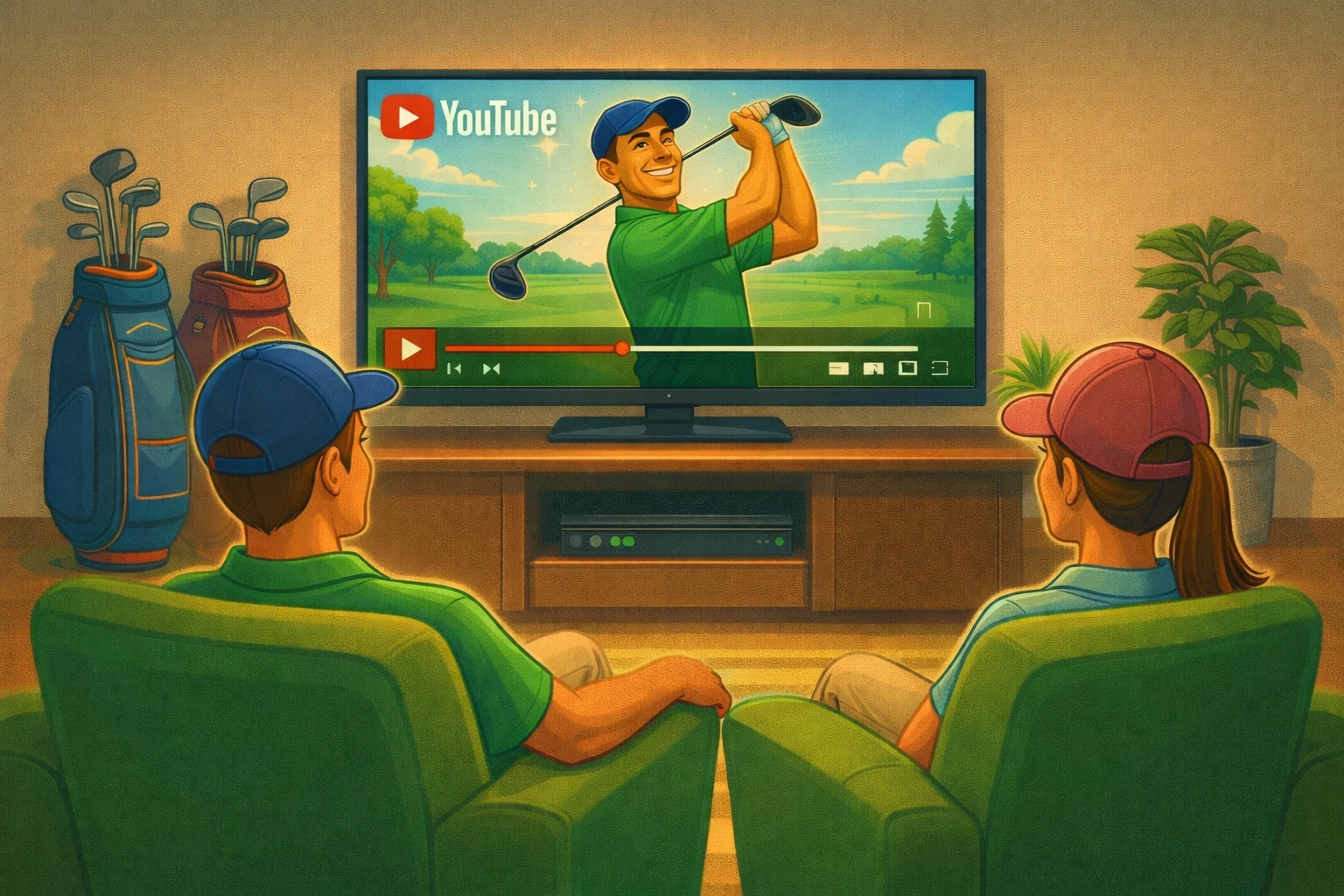
YouTube is brilliant for cat videos, sourdough lessons, and watching people restore rusty tools with oddly relaxing background music. But if you are just starting golf, it is usually not the best place to learn the game.
If you have ever googled “how to swing a golf club” and ended up more confused three hours later, this article is for you. Beginner golfers need structure, sequence, feedback, and a clear understanding of what matters first. YouTube often gives you the opposite: endless tips, conflicting advice, and a very tired brain.
“I watched 47 golf videos last night. I now know everything… except how to hit the ball.”
Every beginner golfer, ever
Key takeaways
- YouTube is not the problem. The problem is using random videos as your main beginner golf lesson plan.
- Beginners need sequence. Grip, setup, balance, contact, direction, and course understanding must be built in the right order.
- Golf tips need context. A good tip for one golfer can be the wrong tip for another.
- Feedback matters. Without feedback, you may practise mistakes until they feel normal.
- YouTube works best as a supplement. Use it after you understand the basics, not before you have a framework.
The irresistible temptation of YouTube golf
YouTube promises everything beginner golfers crave:
- Free lessons
- Instant improvement
- Quick swing fixes
- Simple drills that look easy on screen
- Bold promises like “fix your slice in five minutes”
It feels productive. You are not just scrolling — you are learning. At least, that is what it feels like while your swing slowly becomes a group project between seven different instructors who have never met you.
That is the problem. YouTube golf videos are usually made to grab your attention. Good teaching, especially for beginners, needs something different. It needs order, patience, explanation, and a clear path from simple to more advanced skills.
“Free” is expensive when it costs you time, confidence, and progress.
The firehose problem: too much information, too fast
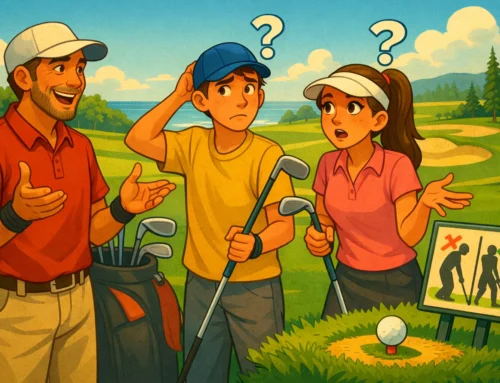
Beginner golfers do not usually lack motivation. They lack filters.
You search for “how to swing a golf club” and suddenly receive a full buffet of information:
- Grip pressure philosophies
- Seven different backswing positions
- Launch monitor numbers you do not yet need
- Hip depth analysis
- Drills involving alignment sticks, towels, chairs, walls, and mild emotional distress
This is a bit like trying to learn to drive by watching Formula 1 pit-stop breakdowns. The information may be impressive, but it is not always useful for your current situation.
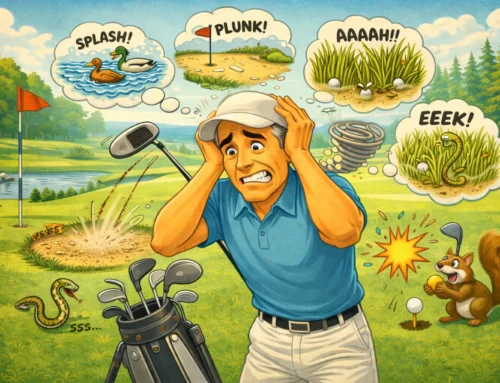
Your brain does not yet know what is important, so it treats everything as urgent. That is how beginners end up with five swing thoughts, three drills, two different grip styles, and one very confused ball.
Confusion does not always feel like confusion. Sometimes it feels like, “I just need one more video.”
When experts violently disagree
One of the strangest things about online golf instruction is that smart coaches can appear to say completely opposite things.
On YouTube, you may hear advice like this, often in the same evening:
- “Keep your head absolutely still.”
- “Let your head move naturally.”
- “Swing from the inside.”
- “Never think about swing path.”
- “Keep your hands ahead of the club.”
- “Release the clubhead earlier.”
The frustrating part is that many of these tips can be correct. They are just not correct for every golfer, in every situation, at every stage of learning.
Golf instruction without sequence becomes noise. A tip that helps one player can damage another player’s progress if it is used at the wrong time.
The problem is not always bad advice. Often, it is good advice at the wrong time.
Golf tips without context, also known as chaos
YouTube golf thrives on isolated tips:
- One drill
- One feeling
- One magic move
- One secret that will “change everything”
But golf is not one move. Golf is a system.
- Grip affects face control.
- Setup affects swing path and balance.
- Balance affects contact.
- Tempo affects timing.
- Decision-making affects your score.
Beginners do not need a pile of disconnected fixes. They need a framework. They need to understand what matters first, what can wait, and how one part of the game influences another.
Without context, you start collecting swing thoughts like wobbly Jenga blocks. Then you wonder why everything collapses by the third hole.
Why copying pros is a terrible idea
Let’s talk about one of the most dangerous sentences in beginner golf:
“I saw Tiger do this…”
Professional golfers are incredible. They also live in a completely different golfing universe from a beginner.
Tour-level players usually have:
- Elite athletic ability
- Thousands of hours of training
- Bodies adapted to golf movement
- Professional coaching and feedback
- Precise control over ball flight, spin, distance, and trajectory
A beginner, meanwhile, may:
- Sit at a desk most of the day
- Stretch “sometimes”
- Play once a week when life allows
- Still be learning what “par” means
- Have no clear idea where the clubface is at impact
Trying to swing like a tour professional when you are just starting is like copying an Olympic gymnast’s warm-up and then being surprised when your back files a formal complaint.
Pros break rules because they have earned the right to. Beginners need the rules first.
The fatal flaw: zero feedback
This is the big one.
YouTube cannot see you. It cannot:
- Check your grip
- Correct your posture
- Notice your balance
- See your clubface
- Adjust your misunderstanding
- Tell you when you are doing the drill incorrectly
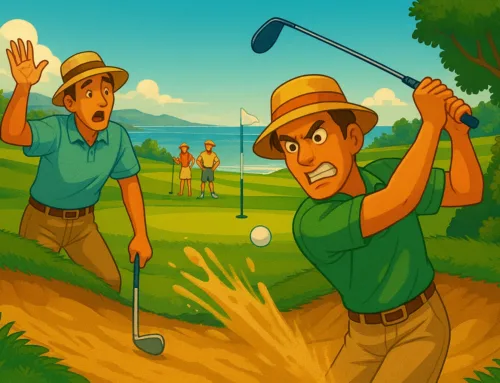
That means you may practise a drill incorrectly for weeks while believing you are doing exactly what the video said. In golf, small mistakes can create big consequences. A slightly poor setup can affect balance. Poor balance can affect contact. Poor contact can make you search for another swing fix that was never the real issue.
Without feedback, you do not necessarily get better. You may simply become more consistent at doing the wrong thing.
Practice does not make perfect. Practice makes permanent.
How YouTube quietly kills confidence
YouTube does not yell at you. It does something worse. It can slowly make you feel like:
- You should be better by now.
- You are missing something obvious.
- Everyone else understands golf faster than you do.
- Your swing is broken because one video said so.
Every video seems to show perfect demonstrations, clean contact, and effortless improvement. Your reality may include topped shots, fat shots, slices, confusion, and the occasional existential challenge beside the driving range bucket.
That gap can quietly wear down your confidence. And confidence matters enormously in golf. A nervous beginner with too much technical information often swings worse, not better.
What beginner golfers actually need
Beginner golfers do not need hacks. They need a learning system that makes the game easier to understand.
More specifically, beginners need:
- A clear mental map of the game so they understand what they are trying to do.
- Simple fundamentals in the right order instead of random fixes.
- Permission to be bad at first because golf is not meant to be mastered in an afternoon.
- Feedback that fits their level, so they know what to correct and what to ignore.
- Basic course understanding so they learn how to play, not just how to swing.
That is why a structured beginner course, a clear practice plan, or guidance from a qualified instructor is usually much more valuable than endless scrolling.
Understanding beats imitation. Every time.
When and how YouTube can be useful
YouTube is not evil. It is just misunderstood.
Used well, YouTube can be a helpful supplement. It works best when:
- You already understand the basic fundamentals.
- You are looking to reinforce a concept you have already learned.
- You know which part of your game you are working on.
- You can separate useful instruction from entertainment.
- You avoid jumping from one swing theory to another every week.
In other words, YouTube can support your golf learning, but it should not be the foundation. Think of it as extra flavour, not the main course.
Final thoughts and a small intervention
If you are new to golf, here is the kind version: step away from the algorithm and focus on the basics.
Golf is hard, but it is not supposed to be chaotic. It becomes chaotic when learning has no structure. Beginners need to know why things work before they obsess over how to copy a move. Build your basics first. Learn the game in a sensible order. Save YouTube for later, when you have enough understanding to use it wisely.
Your future self — and your scorecard — will thank you.
Now go practise. Calmly. With purpose. And maybe without autoplay.
FAQ: Learning golf from YouTube
Is YouTube bad for learning golf?
No. YouTube can be useful, but it is not ideal as the main learning method for beginners. New golfers often need structure, feedback, and clear priorities before random tips become helpful.
Why do beginner golfers get confused by YouTube tips?
Because many videos give isolated advice without knowing the golfer’s swing, skill level, or main problem. A tip that helps one player may be completely wrong for another.
What should beginners focus on first in golf?
Beginners should focus on grip, setup, balance, basic contact, simple shot direction, short game basics, and understanding how to play the course sensibly.
Can YouTube golf lessons help later?
Yes. Once you understand the fundamentals, YouTube can help reinforce concepts, provide drills, and support practice. It works best as a supplement, not a replacement for structured learning.
Keep reading