What to Do When You Are In in Trouble — Water, Trees, Rough and Lost Balls
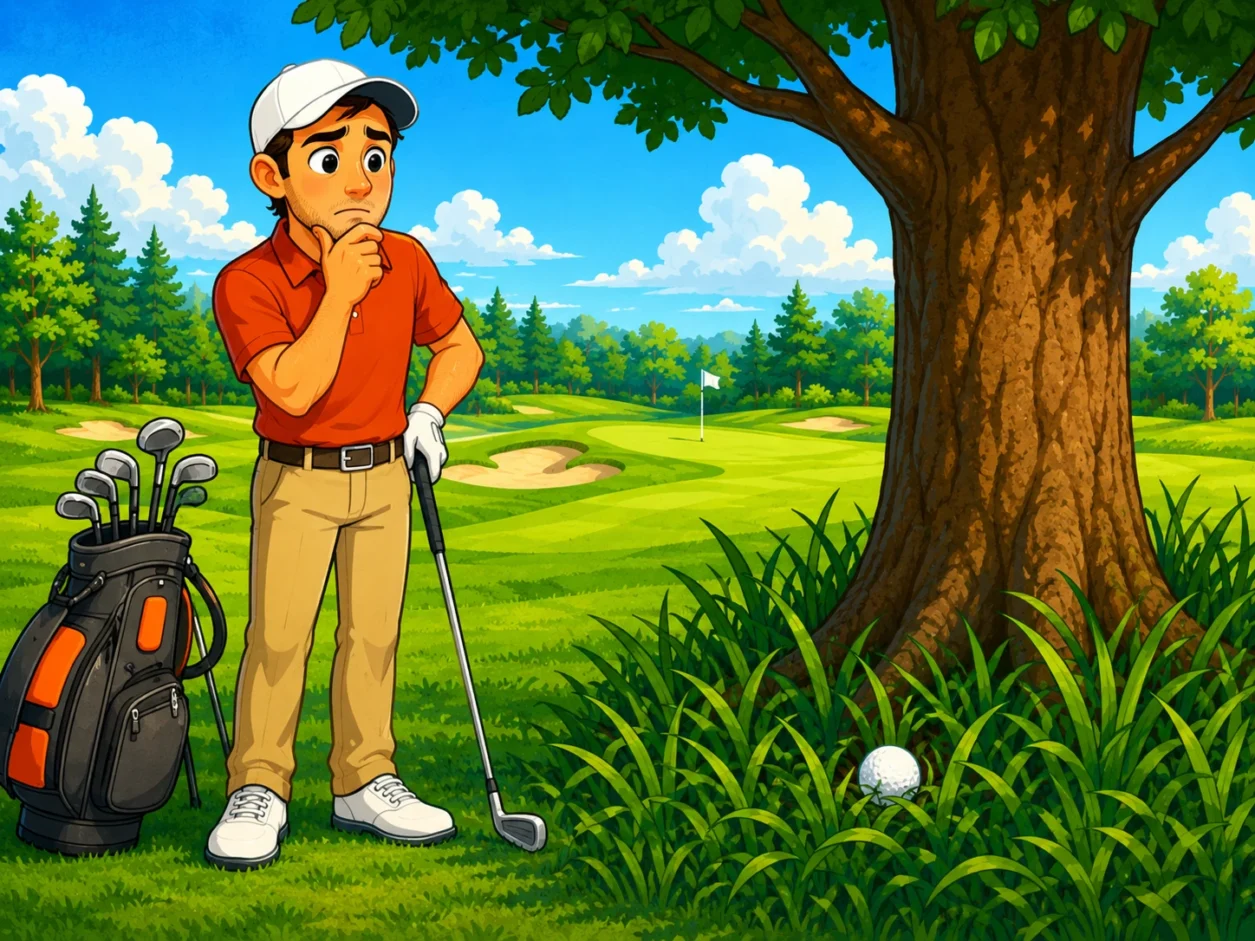
Every golfer has the same dramatic experience: you hit the ball, and it starts beautifully. Then it goes sightseeing—into water, behind a tree, or deep in the rough. Sometimes it finds a bush that seems designed by the course architect just to eat beginner golf balls.
Welcome to golf. Trouble is not an exception. Trouble is part of the game.
A bad lie, penalty area, or lost ball does not have to ruin your round. Disaster happens after the first mistake—when a golfer panics, guesses the rules, or tries a miracle recovery. This often turns one dilemma into a seven-shot adventure. Golf is not about avoiding trouble. It is about knowing what to do next.
This guide is for beginners. It explains what to do when your ball is in trouble—in water, trees, thick rough, bushes, or lost. We also explain penalty shots in plain language. Rules can sound harder than they are. Think of this as your calm golf survival guide. Panic less, avoid disasters, and finish more rounds feeling, “Actually, I handled that pretty well.”
Beginner rule of thumb: The best recovery shot is not always the shot that goes closest to the hole. It is the shot that gets you safely back into the hole.
Quick answer: What should you do first?
When your ball is in trouble, start with a pause. Do not rush. Don’t grab the most powerful club. Don’t say, “I think I can get it through that gap,” while your partners brace for impact.
Ask: Can I find the ball? If not, it may be lost.
- Can I play it as it lies? If yes, choose the safest realistic shot.
- Is the ball in a penalty area? Water, red stakes and yellow stakes matter.
- Would a penalty drop actually save me strokes? Sometimes one penalty stroke is cheaper than three failed recovery swings.
Many beginners think a penalty is a punishment. Often, a penalty is also a rescue. The rules give safe ways to keep your round moving, so you do not have to hack forever from somewhere you should never have gone.
Your goal is not a spectacular shot. You want the best chance to finish the hole without a bigger mess. That may mean chipping sideways, taking a drop, playing a provisional ball, or focusing on damage control instead of glory.
Penalty shots explained simply.
A penalty shot adds one to your score when the rules require it. It is not a physical swing. Instead, it is a number you must add because something went wrong: like losing a ball, going out of bounds, hitting into a penalty area, or declaring an unplayable ball.
Here is the simple version:
- One penalty stroke is added for most relief situations, such as taking relief from a red or yellow penalty area, declaring a ball unplayable, or replaying from the previous spot under stroke-and-distance.
- Stroke and distance means you add one penalty stroke and play again from where the previous stroke was made.
- A lost ball or out-of-bounds normally requires stroke and distance: one penalty stroke, then replay from the previous spot.
- Some clubs use a Local Rule for lost balls or out-of-bounds shots during casual play. If this rule is in effect, it usually results in a two-stroke penalty. You then drop near where the ball is estimated to be lost or out of bounds. Always check the club’s local rules.
That may sound like admin work, but the idea is actually fair and logical. If your ball disappears or leaves the course, the rules need a way to keep the game without giving you an advantage. The penalty stroke balances the situation.
Suppose you hit your tee shot into a lake. That was stroke one. You take relief and add one penalty stroke. Your next shot is stroke three. If you then hit the green, you are lying three. It may feel painful, but this is normal golf. Even good players make bogeys and doubles from penalty areas. The smart ones avoid turning them into triples.
Smart golf is not about avoiding penalties. It’s about knowing when taking a penalty is actually the best option.
When your ball is in water or a penalty area
Water is the classic beginner panic. The ball splashes, someone says “bad luck,” and golf suddenly feels like a legal exam. These days, most water hazards are called penalty areas. They are marked with red or yellow stakes or lines.
If your ball is in a penalty area but playable, you can play it as it lies. It may sit on dry ground, a bank, or shallow grass beside a stream. But ‘allowed’ does not always mean ‘smart.’ If you cannot stand safely, make clean contact, or escape with confidence, relief is usually better.
Yellow penalty area
With a yellow penalty area, relief options cost one stroke. You may replay from where the last shot was made. Or, take back-on-the-line relief. That means dropping behind the penalty area, on a line from the hole through the point where the ball last crossed the edge.
Red penalty area
Red penalty areas give you the yellow options, plus lateral relief. With one penalty stroke, you can drop within two club-lengths of where the ball last crossed the edge—no closer to the hole. This helps beginners keep pace with play.
- Check whether the area is red or yellow.
- Estimate where the ball last crossed the edge.
- Choose the option that gives the easiest next shot.
- Add one penalty stroke when taking relief.
Do not drop just because it is slightly closer to the hole. Pick the drop that gives you a safe, comfortable next shot. That is how one wet ball does not turn into a wet scorecard.
When your ball is in the trees
Trees eat good scorecards fast. A ball in the trees often brings more decisions than rule problems. The ball is found. It is in play. Now decide: be sensible or try a trick-shot escape?
A beginner often aims for the small gap to the green. A better question: where is the biggest safe gap to the short grass? Most times, distance does not matter first. Escape matters more.
- Look low first. If branches are above you, a low punch is safer than a high shot.
- Use enough loft, but not too much. A wedge can pop into branches; a 7-iron or 8-iron chip-punch may be better.
- Respect the gap. If the opening looks heroic, it is probably too small.
- Choose a landing area. Aim for fairway, semi-rough or a safe lay-up zone.
Sometimes the best shot is sideways, or even backward. It may feel painful, but it saves strokes by giving you a normal next shot. If the ball is under a bush, against a root, or impossible to swing at, you may decide to take unplayable-ball relief instead.
When your ball is in thick rough
Rough is not just longer grass. It changes the whole shot. The club can twist. Grass can grab the hosel. The ball comes out slower. Spin is reduced. Shots from thick rough are much harder to predict, even when just off the fairway. In rough, do not automatically use your normal fairway club. A 5-wood from deep rough is bold, but may only move the ball a few metres and collect grass.
How rough affects the shot
Thick grass can create several problems:
- Less clean contact: Grass gets between the clubface and the ball.
- Less distance: The club slows down before impact.
- Less spin: The ball may roll more after landing.
- Club twisting: The face may close or open through impact.
- Harder height control: The ball may come out low, high, dead, or surprisingly fast.
From light rough, play a normal shot. In heavy rough, focus on putting the ball back into play. Pick more loft, swing with control, and expect the shot not to fly as far.
Beginner club choices from rough
As a beginner, keep it simple:
- If the ball sits down, use a wedge or short iron.
- If the ball sits up and the grass is not too thick, try a mid-iron.
- Avoid fairway woods from heavy rough unless the lie is very good.
- Your first goal is to make clean contact and progress forward.
- If the rough is brutal, pitch out to the side and get back on track. Take charge of your game—choose the smart shot now and finish strong.
A rough lie is not the place for strength. It is the place to prove judgment. The golfer who takes a wedge back to the fairway often beats the one who tries a long club three times. One of the most misunderstood situations for beginners: if your ball is not found within the allowed search time, it is lost. Under the Rules of Golf, stroke and distance applies. Add one penalty and play again from the previous spot.
If your tee shot is lost, the tee shot was stroke one. Add one penalty stroke. Then the next ball played from the tee is stroke three. This is why a provisional ball is so useful.
What is a provisional ball?
A provisional ball is a second ball you play to save time when your original ball might be lost outside a penalty area or might be out of bounds. You must clearly announce it before playing: “I’m going to play a provisional.” If the first ball is found in time and is in play, you continue using the original and pick up the provisional. If the
original is lost or out of bounds, the provisional becomes the ball in play.
There is an important distinction between a lost ball and a ball in a penalty area. If it is known or virtually certain that the ball is in a penalty area, you use penalty-area relief. Merely hoping it is in the penalty area because that option feels nicer is not enough. clubs use a Local Rule for casual play that offers an alternative to walking back to a lost ball or an out-of-bounds shot. It usually costs two penalty strokes and allows a drop in a defined relief area. Check the local rules before using it.
When the ball is unplayable
Sometimes you find the ball, but the ball has made a poor lifestyle choice. It is lodged under a bush, pressed against a tree root, sitting in a footprint, buried in ferns, or positioned so that a normal swing is impossible. This is where the unplayable-ball rule becomes your friend.
You may declare your ball unplayable anywhere on the course except in a penalty area. If the ball is in a penalty area, you must use the penalty-area relief options instead.
For an unplayable ball in the general area, you normally have three relief options, each costing one penalty stroke:
- Stroke and distance: Go back and play from where you made the previous stroke.
- Back-on-the-line relief: Drop behind the ball on a line from the hole through where the ball lies.
- Lateral relief: Drop within two club-lengths of where the ball lies, no closer to the hole.
The lateral option is often useful in trees and bushes, but be careful: two club-lengths may not get you out of trouble if the bush is large. Before you choose, look at your options. Sometimes back-on-the-line relief gives a better angle. Sometimes stroke and distance is the cleanest reset. The best choice is the one that gives you the easiest next shot, not the one that feels least painful emotionally.
- One penalty stroke can be a bargain. It is cheaper than hitting the ball twice into the same bush and then deciding to be sensible.
How trouble lies can improve your practice
Here is the secret: trouble shots are not only problems. They are excellent practice. The fairway is tidy and neat; trouble areas are honest. They teach you how contact, club selection, trajectory, and decision making change when the course is not perfect.
As a beginner, you do not need to practise impossible hero shots. Practise simple recovery shots instead:
- Sideways chip-outs: Learn to move the ball 20 to 50 metres back into safety.
- Low punch shots: Use a shorter swing with a 7-iron or 8-iron to keep the ball under branches.
- Rough-lie tests: Drop balls in different depths of grass and discover which clubs actually work.
- Penalty-area planning: On practice rounds, decide where you would drop before you ever need to.
Once you have practised these shots on purpose, they stop feeling like emergencies. They become normal tools in your golf bag.
How to count penalty shots on the scorecard
Penalty shots become less scary when you know how to count them. The scorecard only wants the total number of strokes for the hole, including swings and penalties.
- Ball in water from the tee: Tee shot is stroke 1, penalty is stroke 2, next shot after the drop is stroke 3.
- Lost tee shot with provisional: Original tee shot is stroke 1, penalty is stroke 2, provisional from the tee is stroke 3.
- Unplayable ball: Count the shot that got you there, add one penalty stroke, then count the next shot after the drop.
AA’s simple habit is to count quietly: “That was one, penalty makes two, this is three.” This prevents confusion and keeps the score honest.FAQ: golf balls in trouble
Can I always take a penalty drop when I do not like my lie?
No. You need the correct rule for the situation. A penalty area, an unplayable ball, a lost ball and a bad lie in rough are different situations.
Should beginners always take the safe option?
Not always, but beginners should strongly favour it. A recovery shot is successful if it gives you a normal next shot, not if it looks impressive.
Is a penalty always bad?
No. Sometimes one penalty stroke is the smartest score-saving choice. The real mistake is refusing the penalty and turning one problem into three.
Final thoughts: trouble is part of becoming a golfer
Every golfer gets into trouble. Beginners, club players, scratch golfers and tour professionals all visit water, trees, rough and strange places that were probably not featured in the course brochure. The difference is not that better golfers avoid trouble forever. The difference is that they respond better when it happens.
They slow down. They assess the lie. They understand the penalty options. They choose a recovery shot they can actually play. They accept that one bad swing does not have to become a bad hole, and one bad hole does not have to become a bad round. That is the mindset to build.
When your ball is in trouble, do not ask, “How do I save this with one amazing shot?” Ask, “What is the smartest way to get back in play?” That question alone will save you strokes, stress and possibly a few golf balls. Golf becomes more enjoyable when trouble stops feeling like a crisis and starts feeling like a decision. Make the calm decision, take the sensible option, count the penalty correctly when needed, and keep moving. The round is not ruined. It is just asking you to play golf properly
Suggested next steps
- Start with the beginner golf overview
- Build skills with GolfBoosters theory courses
- Learn why theory-first golf makes practice easier
- Stay calm with The Mind Game
- Use simple choices to break 110
- Reduce wasted strokes and break 100
- Build consistency on the way to break 90
- Develop disciplined scoring habits for break 80
- See how GolfBoosters supports golf clubs
- Return to the basics before your next round