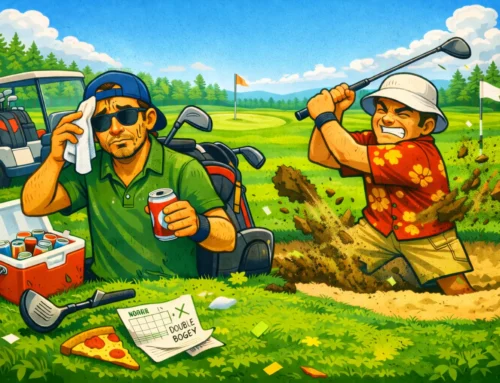
Golf Etiquette Explained
The Do’s and Don’ts Every Beginner Should Know: Why Golf Rules and Etiquette Usually Aren’t Annoying, and How They Actually Make the Game More Fun
Learn first, play smarter, and make every round easier to understand.
If you’ve spent any time around golfers, or even just overheard them on a practice green, you’ve probably noticed something: golf has a lot of rules. There’s etiquette, unspoken expectations, spoken ones, and sometimes even passive-aggressive reminders, like the person who taps their watch if you take too long lining up your putt.
Yes, that includes you, the person who once drove a golf cart straight into a flowerbed. Don’t worry, we’ve all done something similar.
So let’s take a relaxed, humorous, and maybe slightly self-mocking walk through the world of golf rules and etiquette. By the end, you’ll see why they’re not just important. They’re the secret sauce that makes golf one of the most satisfying, social, and oddly charming sports around.
The Strange and Wonderful World of Golf Rules
Golf has more rules than a family board game night hosted by a lawyer. Some make perfect sense, like “Don’t hit the ball into your playing partner.” Others are a bit more unusual, such as “If your ball ricochets off an angry goose and lands in a bunker on a leap year, you may or may not take relief depending on whether the goose was moving east at the time.”
Okay, that exact rule doesn’t exist. But some come close.
Yet the truth is that golf’s rulebook isn’t there to torture you. It’s there to make the game fair.
Why Rules Matter (Even the Weird Ones)
Imagine this scenario: you’re standing in the trees after a slice that could qualify as an air-traffic hazard. You look down and see two balls: yours, and another one that is absolutely not yours—but is in objectively a better position, just casually sitting there like a smug little sphere of temptation.
Without rules? You’d swap them. Everyone would swap them. Golf courses would become a lawless ball-swapping wasteland. Chaos. Anarchy. People running around yelling, “Finders keepers!” as they sprint off with someone else’s Pro V1.
Rules are what keep golf from turning into chaos. They provide structure and predictability. They give every player a fair chance, even if that player is you, standing knee-deep in twigs, pretending you’re happy about “playing it as it lies.”
Rules Make Competition Possible
Even if you say you’re not competitive—though most golfers secretly care—rules make things fair. Whether you’re a beginner or a scratch golfer, you follow the same system, the same penalties, and the same definitions of what’s allowed and what’s definitely not.
This is important. It means you can play against someone better than you and still have a fair contest, as long as you don’t move your ball closer to the hole when no one is looking. Don’t do that. It’s frowned upon.
Rules Prevent Arguments (Mostly)
Golf is a social game. You spend several hours with other humans. If there were no rules, those hours would turn into intense arguments about whether your ball was “technically” out of bounds or whether you “maybe should” count that air-swing you definitely made.
Rules save friendships. Rules save foursomes. Rules prevent someone from angrily declaring, “I swear it moved!” while someone else yells, “It didn’t move, it wobbled!”
Rules keep the peace. They’re like golf’s version of neutral diplomats.
Golf Etiquette: The Unrecognised Hero of a Pleasant Round
If golf rules are the skeleton of the game, etiquette is the soft, warm blanket around it. It’s not about being fancy or knowing which fork to use with your clubhouse salad. It’s about being thoughtful, respectful, and aware.
Etiquette is simple: “Behaving in a way that lets everyone enjoy their day.”
Honestly? That’s pretty lovely.
Etiquette Makes Golf Smoother
Golf is really a coordinated walk with sporadic bursts of energy against a small white ball. Because of this, people are often moving in different directions at different times. Etiquette keeps everything functioning properly:
- You don’t stand directly behind someone while they swing.
- You don’t take your sweet time searching for a ball while the group behind builds a small civilisation waiting for you.
- You don’t scream “FORE!” in someone’s backswing (or at least, you try not to).
These small courtesies add up to a smooth flow that keeps everyone happy.
Etiquette Makes Golf Faster
Nothing slows golfers down more than poor etiquette:
- Standing still and staring at your bag while others hit.
- Taking 14 practice swings.
- Reading the green like you’re performing a spiritual ritual.
- Forgetting your putter, walking back to your bag, walking back to the green, realising you also forgot your glove, walking back again…
Good etiquette means being ready, aware, and thoughtful.
Good etiquette keeps the pace of play moving smoothly. Etiquette Helps Keep You Safe. This is not an exaggeration. Golf balls travel fast. Golf clubs are hard. Neither feels good when they make contact with your skull.
Etiquette is partly self-preservation:
- Don’t walk ahead of someone who’s about to hit.
- Don’t stand in the landing area like an oblivious scarecrow.
- Don’t hit into the group in front unless you’re secretly trying to start a feud.
This sport is fun. Hospital visits are not.
Rules and Etiquette Together: Golf’s Perfect Pair. Rules and etiquette are different, but together they’re unstoppable. One keeps the play fair; the other keeps it pleasant. One tells you what to do; the other tells you how to behave. One prevents cheating; the other prevents arguments. One protects your score; the other protects your sanity.
Together, they create the magical experience we call “a round of golf.”
Honestly, golf needs both. Without rules, players would take outrageous liberties. Without etiquette, players would take outrageous… everything else.
Let’s break down how they work together.
Both Keep the Game Enjoyable
Imagine the perfect round. The weather is nice, the pace is good, everyone’s laughing, no one is rushing or slowing down the group behind, and every player is respecting the course’s rhythm.
Rules make this possible by giving structure. Etiquette makes this possible by giving kindness.
The combination makes playing golf feel effortless—even though we all know it’s not.
Both Reduce Stress for Beginners
New golfers often feel intimidated. Why?
Because golf is one of the few sports where you’re expected to:
- Know a hundred rules.
- Understand dozens of etiquette points.
- Operate expensive equipment
- Navigate large spaces
- Not accidentally hit someone
- Not take ages
- Do not destroy the turf.
- Don’t lose your cool.
- Don’t lose your ball for the 13th time in nine holes.
That’s a lot.
But here’s the secret: etiquette and rules exist to help beginners. They turn disorder into clarity. They give confidence. They make the course feel safe and predictable because everyone else is playing by the same rules.
Both Make the Course More Pleasant for Everyone
If rules are ignored, the course becomes a mess. Balls flying everywhere. Fairways damaged. Footprints on greens. Lines faded, literally and metaphorically.
If etiquette is ignored, the course becomes stressful. People are getting hit. People are waiting forever. People standing inside shadows, talking during swings, trampling someone’s putting line like a confused toddler.
When are both followed? It’s paradise.
A Closer Look at Key Rules That Make Golf More Fun
We’re not exploring the entire rulebook (you’re welcome), but here are a few rules that really improve the experience.
“Play the Ball as It Lies”
Yes, this rule caused you immense emotional damage when your ball landed in a crater made by a goose’s foot. But the principle is beautiful: it tests creativity. It rewards honesty. It turns the course into a puzzle, not a shopping mall where you choose the best location.
Out of Bounds Exists for a Reason
OB hurts. It stings. It bruises the soul. But it also prevents you from doing ridiculous things like:
- Hitting from someone’s backyard
- Trying to chip off a paved road
- Playing your ball beside a busy highway
OB keeps the game within… You know… the golf course.
Penalty Areas Keep the Game Moving
Without defined penalty areas, chaos would reign. People would be wading into ponds, negotiating with swans, and holding up eight groups behind them while arguing over whether their ball is playable underwater.
The drop zone saves time, sanity, and laundry costs.
And Now, the Etiquette Hits: Little Behaviours That Make Big Differences
Be Prepared When It’s Your Turn
Not early. Not late. Just ready.
Golfers love this. It’s like the greatest gift you can give them, besides birdie putts and free snacks.
Repair Your Pitchmarks (Yes, Even If It Wasn’t You)
This is good karma. Repair one extra pitchmark per green, and the golf gods will bless your next putt. Probably.
Don’t Talk During the Swing
Unless you want to be exiled from the group chat, stay quiet. Golf swings require concentration, balance, timing, and the ability to ignore the voice in your head saying, “Don’t mess this up.”
Keep Up With the Group Ahead
This single guideline solves 85% of pace-of-play problems.
You don’t chase the group behind. You stay politely near the group in front. Simple. Effective. Beautiful.
Celebrate Good Shots (Even Not Your Own)
Golf is a lonely game. Don’t let people suffer alone—or succeed alone. Compliment the good shots. Laugh at the ridiculous ones (gently). Be the kind of playing partner people want to invite again.
Why Beginners Benefit the Most From Rules and Etiquette
Starting golf can feel like walking into a movie halfway through. Everyone seems to know what’s going on except you.
But rules and etiquette create a pathway—a roadmap for behaviour, expectations, and decisions.
They Make You Feel Less Lost
Instead of guessing where to stand or when to hit, you follow simple guidelines. Instead of panicking when your ball lands somewhere terrible, you know your relief options. Instead of slowing down the round, you understand pace and capability.
They Protect You From Embarrassment
Nothing saves beginners more than etiquette. Want to avoid:
- Accidentally stepping on someone’s line.
- Talking at the wrong time
- Standing where you shouldn’t
- Taking too long
- Looking confused and panicked
Etiquette has your back.
They Help You Fit In Quickly
Golf is social. Whether you’re playing with friends, coworkers, strangers, or the random retiree who shows up with a magical ability to par everything, rules and etiquette help you blend in.
Before long, you’ll be nodding knowingly, repairing divots, raking bunkers like a pro, and quietly making fun of yourself just like every other golfer.
The Surprising Truth: Rules and Etiquette Make Golf More Fun
This is the heart of it all. The biggest reason golfers care about rules and etiquette isn’t that they’re strict or serious or controlling. It’s because these things make the game more enjoyable.
They create flow. They create safety. They create shared expectations. They create fairness. They create social harmony. They create that magical feeling of “Ahhh… golf.”
Fun Happens When Everyone Knows What They’re Doing
Imagine four players who all:
- Know when to hit
- Know where to stand
- Know how to take relief.
- Know how to keep pace.
- Know how to treat the course.
- Know how to treat each other.
That group has fun.
They chat. They laugh. They joke about bad shots. They cheer good ones. They finish the round with energy instead of frustration.
Fun Happens When You Don’t Feel Stress
No one is watching you with angry eyes. No one is waiting on you forever. No one is hitting into you. No one is standing behind you breathing loudly like a confused bull.
Rules eliminate confusion. Etiquette eliminates tension.
Fun Happens When the Course Is in Good Condition
Pitchmarks repaired. Bunkers raked. Divots replaced. Tee boxes cared for.
Etiquette is basically group maintenance. And golfers love good maintenance.
Let’s Be Honest: Golf Needs All the Help It Can Get
Golf is amazing, but it’s also:
- Hard
- Humbling
- Occasionally heartbreaking
- Physically confusing
- Emotionally unpredictable
- The only sport where you can play brilliantly and terribly within five minutes
So anything that makes the game smoother, kinder, and more predictable is a blessing.
Rules do that. Etiquette does that. Together, they make golf the game we love—even when the game doesn’t seem to love us back.
In the End, Rules and Etiquette Aren’t There to Limit You—They’re There to Lift You
Think of golf rules as the GPS that keeps you from getting hopelessly lost. Think of etiquette as the friendly voice reminding you to turn your blinker on so you don’t terrify the drivers around you.
Rules help the game make sense. Etiquette helps the game feel good.
They take a sport that could be chaos and turn it into something graceful, respectful, and genuinely enjoyable. They help golfers of all levels play together. They create fairness. They speed up the play. They reduce stress. They protect the course. They prevent arguments. They save friendships.
And best of all? They make the game fun.
Fun to play. Fun to learn. Fun to share with others.
So the next time you’re on the course, remember: following rules and etiquette isn’t about being perfect or proper or a golf traditionalist. It’s about doing your part to make sure everyone—including you—has the best possible time.
And trust me… when golf is fun, it’s really fun.
Even when your ball goes somewhere it absolutely shouldn’t. Even when you take four shots to get out of a bunker. Even when you’re putting, it looks like you’re softly nudging the ball around for scientific research purposes.
Golf is fun because it’s a mutual journey—and rules and etiquette are what make that journey easy.
So embrace them. Learn them. Use them. Laugh about them. And enjoy the game the way it’s meant to be enjoyed: with good people, good behaviour, and a good amount of self-sarcasm.
Suggested next steps
- Start with the golf basics
- Build knowledge with GolfBoosters theory courses
- Understand the GolfBoosters learning difference
- Strengthen the mental side of golf
- Set your first scoring goal: break 110
- Move from beginner golf toward breaking 100
- Improve consistency and work toward breaking 90
- Learn the disciplined path toward breaking 80
- Explore GolfBoosters for golf clubs
- Return to the beginner-friendly overview of golf