Club Fitting for Amateurs: How to Choose Golf Clubs That Actually Help
Club fitting can sound a little intimidating at first. Shafts, lie angles, loft gaps, launch windows, spin rates, swing weights, grip sizes — it can feel like walking into a golf shop and accidentally entering a physics exam.
But here is the good news: club fitting for amateurs does not need to be complicated. In fact, a good fitting should make golf feel simpler. The whole point is to help you find clubs that suit your swing, not the swing you wish you had, not the swing you saw on YouTube, and definitely not the swing your friend with the 7-handicap thinks you should copy.
The right clubs should help you hit more useful shots more often.
That does not mean every shot becomes perfect. Golf is still golf. But properly fitted clubs can help you strike the ball better, launch it more easily, reduce big misses, improve distance gaps, and give you more confidence when you stand over the ball.
This guide explains club fitting in a light, practical way for amateur golfers. No unnecessary jargon. No pressure to buy the most expensive clubs. Just a clear look at what matters, what does not matter as much as people think, and how to make smarter decisions when choosing golf clubs.
What Is Club Fitting?
Club fitting is the process of matching golf clubs to your body, swing, ball flight, and playing goals. It looks at how you deliver the club to the ball and then adjusts the club specifications to help you produce better results.
A fitting may include:
- Club length
- Lie angle
- Loft
- Shaft material
- Shaft weight
- Shaft flex
- Shaft launch and spin profile
- Club head design
- Grip size and style
- Set makeup
- Distance gaps between clubs
In simple terms, a club fitter tries to answer one big question:
What club setup gives this golfer the best chance of hitting good shots consistently?
Notice the word “consistently.” Club fitting is not about the one magic shot you hit perfectly every 25 swings. It is about improving your normal shots, your average shots, and even your bad shots.
For amateurs, that is where the real value is. Most golfers do not need clubs designed for perfect swings. They need clubs that help when the strike is slightly low on the face, a little toward the heel, or when the swing is not quite as smooth as it was on the practice range.
Why Amateur Golfers Benefit From Club Fitting
Many amateur golfers think club fitting is only for elite players. That is one of the biggest myths in golf equipment.
Yes, tour players are fitted in great detail. But they are already highly skilled. They can adapt quickly. They can hit the center of the face again and again. Amateurs often need fitting even more because the right equipment can make the game more forgiving.
A properly fitted club can help you:
- Launch the ball higher
- Reduce a slice or hook tendency
- Improve contact quality
- Gain more consistent distance
- Create better distance gaps between clubs
- Improve comfort and confidence
- Reduce strain caused by clubs that are too long, short, heavy, or light
For example, a golfer who struggles to get the ball airborne may not need a complete swing rebuild immediately. They may simply be using irons with too little loft, shafts that are too heavy, or long irons that should be replaced with hybrids.
Another golfer may slice the driver badly. The solution may involve lessons, yes — but a driver with more loft, a shorter shaft, a draw-biased head, or a better shaft weight could reduce the damage and make the game more playable.
Good fitting does not replace good coaching. But it can stop your clubs from fighting against you.
The Biggest Club Fitting Mistake Amateurs Make
The biggest mistake amateurs make is buying clubs based mainly on distance.
We have all seen it. A golfer tests a 7-iron, hits one shot five meters longer than their current club, and suddenly the credit card is out. But distance alone does not tell the full story.
When choosing clubs, you should look at:
- Carry distance, not just total distance
- Launch angle
- Spin rate
- Landing angle
- Shot dispersion
- Strike location
- Distance consistency
- How the club performs on poor swings
A 7-iron that flies longer but lands too flat may not hold the green. A driver that produces one huge shot but five wild ones may not help your score. A wedge that feels exciting in the shop may be difficult from real turf and sand.
Distance is nice. Useful distance is better.
The best club is not the one that goes farthest once. It is the one that helps you play better golf more often.
Driver Fitting: More Than Just Distance
The driver is the club most amateurs get excited about. That is understandable. Hitting a long drive feels fantastic. It makes you walk to the ball with a little extra swagger, even if you are trying to look calm about it.
But driver fitting is not just about maximum distance. It is about playable distance.
A good driver fitting looks at:
- Loft
- Club head type
- Shaft length
- Shaft weight
- Shaft flex
- Launch angle
- Spin rate
- Strike location on the face
- Shot direction and curve
Many amateurs use drivers with too little loft. They see 9 degrees on a driver and think it looks powerful. But if the ball launches too low, spins too little, and falls out of the sky, that “powerful” driver is not helping.
More loft can often help amateur golfers launch the ball higher, carry it farther, and reduce sidespin. That does not mean everyone needs a high-loft driver, but many players would benefit from testing one.
Driver length is another important point. Standard drivers have become quite long over the years. A longer driver can create more clubhead speed, but only if you can strike the ball well. For many amateurs, a slightly shorter driver produces better average distance because the strike becomes more centered.
Think of it like this:
- A longer driver may create more speed.
- A shorter driver may create better contact.
- Better contact often wins.
For slicers, head design also matters. A draw-biased driver can help the face close more easily and reduce the left-to-right curve for a right-handed golfer. It will not magically fix every slice, but it can make the miss less punishing.
Iron Fitting: Forgiveness, Distance, and Control
Iron fitting is where many amateurs can gain a lot of consistency. The right irons can make approach shots easier, help the ball launch higher, and give you more confidence from the fairway.
Iron heads come in several broad categories:
- Blades or musclebacks: Designed for excellent ball-strikers who want maximum feel and control.
- Players cavity irons: A traditional look with some forgiveness.
- Players distance irons: Compact-looking irons with extra ball speed and stronger lofts.
- Game improvement irons: Forgiving irons designed to help launch, distance, and off-center strikes.
- Super game improvement irons: Maximum help for beginners, slower swingers, and inconsistent ball-strikers.
Most amateurs should at least test game improvement or forgiving players distance irons. That does not mean you need the biggest club head available, but you should not choose a small, unforgiving iron just because it looks “professional.”
Your golf bag is not a fashion show. Choose the clubs that help your scorecard, not your ego.
One of the most important parts of iron fitting is lie angle. Lie angle affects where the clubface points at impact. If the lie angle is too upright or too flat, the ball can start offline even when you make a decent swing.
For a right-handed golfer:
- If the lie angle is too upright, shots may tend to start left.
- If the lie angle is too flat, shots may tend to start right.
Length also matters. Clubs that are too long can make it hard to control strike location. Clubs that are too short can affect posture, comfort, and delivery. A fitter will usually consider your height, wrist-to-floor measurement, posture, and impact pattern.
Modern iron lofts are another key topic. Many newer irons are stronger lofted than older models. That means today’s 7-iron may have the loft of an older 6-iron. This can create more distance, but it can also reduce launch and spin if the club does not suit the player.
The question is not only, “How far does this 7-iron go?” The better question is:
Does this iron fly high enough, stop well enough, and gap properly with the rest of my set?
Shaft Fitting: Weight, Flex, and Feel
Shaft fitting is often misunderstood. Many golfers think shaft flex is the whole story. They ask, “Should I play regular or stiff?” That is a fair question, but it is only one part of the fitting puzzle.
The main shaft factors are:
- Material
- Weight
- Flex
- Torque
- Launch profile
- Spin profile
- Bend profile
- Feel
For many amateurs, shaft weight is more important than shaft flex. A shaft that is too heavy can make the club feel like work. A shaft that is too light can make timing difficult. The correct weight often helps rhythm, balance, and strike quality.
Steel shafts are common in irons because they offer stability and control. Graphite shafts are common in drivers, fairway woods, and hybrids, and they are becoming more popular in irons too. Graphite can be lighter, easier to swing, and more comfortable for players who want less vibration.
Flex still matters, of course. A shaft that is too soft may feel loose or hard to control. A shaft that is too stiff may feel boardy, launch too low, or make it harder to square the face. But there is no universal standard for flex. One brand’s stiff may feel different from another brand’s stiff.
That is why testing is so important. Do not simply choose a shaft because the label sounds right. Choose it because the ball flight, strike pattern, and feel are right.
A good shaft should help you:
- Feel the club during the swing
- Return the clubface consistently
- Launch the ball in a useful window
- Control strike location
- Swing with natural rhythm
Do not chase a shaft that “performs” on one perfect swing but feels difficult on normal swings. Golf is played with your normal swing, not your once-a-week miracle swing.
Wedge Fitting: The Scoring Clubs
Wedges are some of the most important clubs in the bag, yet many amateurs choose them almost randomly. They buy a 52, 56, and 60 degree wedge because that sounds like what golfers are supposed to do.
But wedge fitting is about more than loft.
A proper wedge setup considers:
- Loft gaps
- Bounce
- Grind
- Sole width
- Turf conditions
- Sand conditions
- Your angle of attack
- Your short-game style
Loft gaps are the starting point. You need to know the loft of your pitching wedge because modern pitching wedges can vary a lot. Some are around 46 degrees, while others can be much stronger. If your pitching wedge is 43 degrees and your next wedge is 56 degrees, you may have a huge distance gap.
Bounce is where many amateurs get confused. Bounce is the angle that helps the club glide through turf or sand instead of digging. For many amateur golfers, bounce is your friend.
Players who are steep, take deeper divots, or play on soft turf often benefit from more bounce. Players who are shallow, sweep the ball, or play on firm turf may prefer less bounce.
Most amateurs do not struggle with wedges because they have too much bounce. They struggle because they do not understand how bounce helps.
A wedge with the right bounce can make bunker shots easier, chips less scary, and pitch shots more forgiving. A wedge with the wrong sole can make even simple shots feel like surgery.
When fitting wedges, also think about how you actually play. Do you like opening the face around the green? Do you mostly hit simple square-face chips? Do you play from soft sand or firm sand? Do you take big divots or brush the grass?
Your wedges should match your short game, not just your favorite tour player’s setup.
Putter Fitting: The Club You Use Most
The putter is the most used club in the bag, but it is often the least fitted. Many golfers choose a putter because it looks nice, feels good in the shop, or was on sale near the counter.
That is not exactly scientific.
Putter fitting can help with:
- Aim
- Distance control
- Start line
- Stroke consistency
- Face control
- Comfort and posture
The main putter fitting elements are length, loft, lie angle, head shape, toe hang, alignment style, and grip.
Length is very important. If the putter is too long, your eyes may sit too far inside the ball, and your posture may become too upright. If it is too short, you may feel cramped or bent over. The right length helps you set up naturally and see the line better.
Head shape also matters. Blade putters often suit players with more arc in the stroke. Mallets and high-MOI putters can offer more stability and alignment help. Face-balanced putters may suit players with a straighter stroke tendency, while toe-hang putters often suit players with more face rotation.
But the most important putter question is not whether it looks traditional or modern. The question is:
Can you aim it, start the ball online, and control distance with it?
A putter that looks beautiful but points two degrees right at address is not doing you any favors. A putter that helps you aim correctly and roll the ball consistently is worth serious attention.
Grip Fitting: Your Only Connection to the Club
Grips are easy to overlook because they are not as exciting as shiny new club heads. But grips matter. They are your only physical connection to the club.
Grip fitting includes:
- Size
- Texture
- Firmness
- Taper
- Material
- Weather performance
Grip size can affect hand action. A grip that is too small may encourage too much hand movement. A grip that is too large may reduce release and feel. But this is not the same for every player, so testing matters.
Common grip sizes include:
- Undersize
- Standard
- Midsize
- Jumbo or oversize
- Custom built-up sizes with extra tape
Texture is also personal. Some players like soft, comfortable grips. Others prefer firmer grips with more feedback. Golfers who play in wet weather or have sweaty hands may prefer corded or hybrid grips for extra traction.
Putter grips are a separate topic. Larger putter grips can quiet the wrists and help some players feel more stable. Smaller pistol-style grips can give more feedback and touch. Again, the best choice depends on your stroke and preference.
Do not wait until your grips are shiny, hard, and smoother than a hotel lobby floor. Worn grips can cause tension because you have to hold the club tighter. Fresh grips can make the club feel better immediately.
Set Makeup: Do You Need Every Club?
Club fitting is not only about individual clubs. It is also about how the whole bag works together.
A traditional set might include driver, 3-wood, 5-wood, long irons, mid irons, short irons, wedges, and putter. But many amateurs would score better with a more personalized setup.
For example:
- A 5-wood may be easier and more useful than a 3-wood.
- A 7-wood may be better than a long iron.
- Hybrids may replace 4- and 5-irons.
- Some players need more wedges.
- Some beginners do not need 14 clubs immediately.
The key is distance gapping. You want clubs that cover different distances without big gaps or unnecessary overlap.
If your 5-iron, 6-iron, and hybrid all go nearly the same distance, something needs adjusting. If your pitching wedge goes 115 meters and your sand wedge goes 75 meters, there may be a missing club. If your 3-wood is impossible from the fairway, it may be more decorative than useful.
Your golf bag should be a toolbox, not a museum of clubs you hope to hit one day.
When Should an Amateur Golfer Get Fitted?
You do not need to be a single-digit handicapper to get fitted. In fact, fitting can be helpful at several stages.
You should consider a fitting if:
- You are buying your first proper set of clubs
- Your clubs are more than 8–10 years old
- You have changed your swing significantly
- Your body has changed in strength, mobility, or flexibility
- You struggle with consistent contact
- Your ball flight is too low, too high, or too curved
- You have large distance gaps between clubs
- You are using hand-me-down clubs
- You feel uncomfortable at address
- You want to improve but are unsure whether your equipment suits you
Beginners can benefit from a basic fitting, especially for length, lie, shaft weight, and grip size. More experienced players may benefit from a more detailed fitting with launch monitor data, outdoor ball flight, and full bag gapping.
One important note: if you are currently taking lessons and making major swing changes, tell your coach and fitter. Sometimes it is smart to wait before making a big equipment change. Other times, a better-fit club can support the swing changes you are working on.
What to Expect During a Club Fitting
A good fitting should feel like a conversation, not a sales trap. The fitter should ask about your game, your misses, your goals, and your current clubs.
Expect questions like:
- How often do you play?
- What is your handicap or typical score?
- What is your usual ball flight?
- What is your common miss?
- Which clubs do you like?
- Which clubs do you avoid?
- Do you want more distance, more control, or more forgiveness?
- Do you have any injuries or comfort issues?
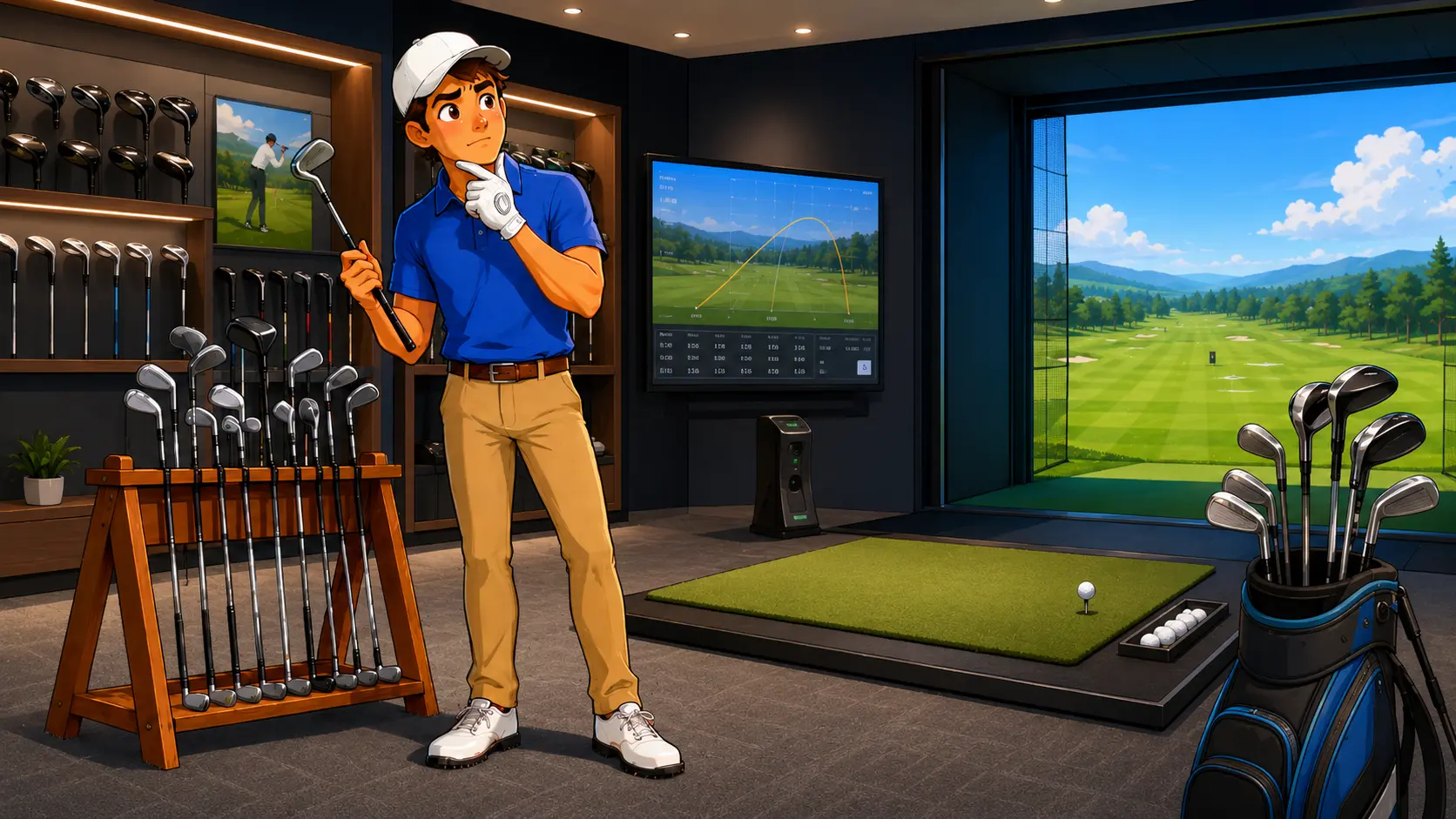
You may hit shots with your current clubs first. This gives a baseline. Then the fitter will test different combinations of heads, shafts, lengths, lofts, and lie angles.
Launch monitor numbers can be helpful, but do not ignore feel and visual confidence. A club that produces good numbers but feels terrible may not last long in your bag. On the other hand, a club that feels nice but performs badly is not ideal either.
The best fittings combine:
- Data
- Ball flight
- Strike pattern
- Player feedback
- Practical course use
Common Club Fitting Myths
Let’s clear up a few common myths.
Myth 1: “I am not good enough to be fitted.”
You do not need to be good to benefit from clubs that suit you. In fact, forgiving and well-fit clubs can help you enjoy the game more while you improve.
Myth 2: “Stiffer shafts are always better.”
No. The right shaft is the one you can load, time, and deliver consistently. Too stiff can be just as bad as too soft.
Myth 3: “Longer clubs mean longer shots.”
Only if you strike the ball well. Extra length can create more speed but also more off-center hits. Average distance matters more than one perfect strike.
Myth 4: “Blades will make me a better ball-striker.”
Not necessarily. They may give more feedback, but they can also make the game harder than it needs to be. Improvement comes from practice, coaching, and smart equipment choices.
Myth 5: “Club fitting is only about buying new clubs.”
A fitting can also show that your current clubs are mostly fine but need lie adjustments, new grips, loft checks, or a different set makeup.
Final Thoughts: Better Clubs, Easier Golf
Club fitting for amateurs is not about chasing perfection. It is about making golf a little easier, a little clearer, and a lot more enjoyable.
The right clubs can help you stand over the ball with more confidence. They can help you reduce the worst misses. They can improve your launch, distance gaps, and comfort. They can also stop you blaming yourself for problems partly caused by poor equipment fit.
That said, clubs are not magic. A new driver will not fix every swing issue. A new putter will not read greens for you. A new wedge will not automatically turn you into a short-game genius.
But well-fit clubs can give you a better chance. And in golf, a better chance is worth a lot.
The goal of club fitting is not to build the perfect golf club. The goal is to build a better match between the golfer, the swing, and the shot.
So before you buy your next club because it looks good, sounds good, or promises ten extra meters, ask the better question:
Does this club actually help me play better golf?
If the answer is yes, you are on the right track. If the answer is “I’m not sure, but it was shiny,” maybe book a fitting first.