The Game of Golf
Tradition, Strategy, and Timeless Appeal
Few games capture the balance of elegance, challenge, and camaraderie quite like golf. At its core, golf is a deceptively simple pursuit: move a small white ball from a starting point—the tee—into a distant hole in as few strokes as possible. Yet anyone who has ever played the game knows it is far more than that.
Golf is not simply about striking a ball; it is about strategy, patience, self-discipline, and respect for both the course and one’s fellow players. This combination of sport, leisure, and tradition has made golf one of the most enduringly popular pastimes in the world.
Key takeaway: Golf endures because it blends strategy, integrity, and community—every round is a fresh conversation between player, course, and game.
A Brief History
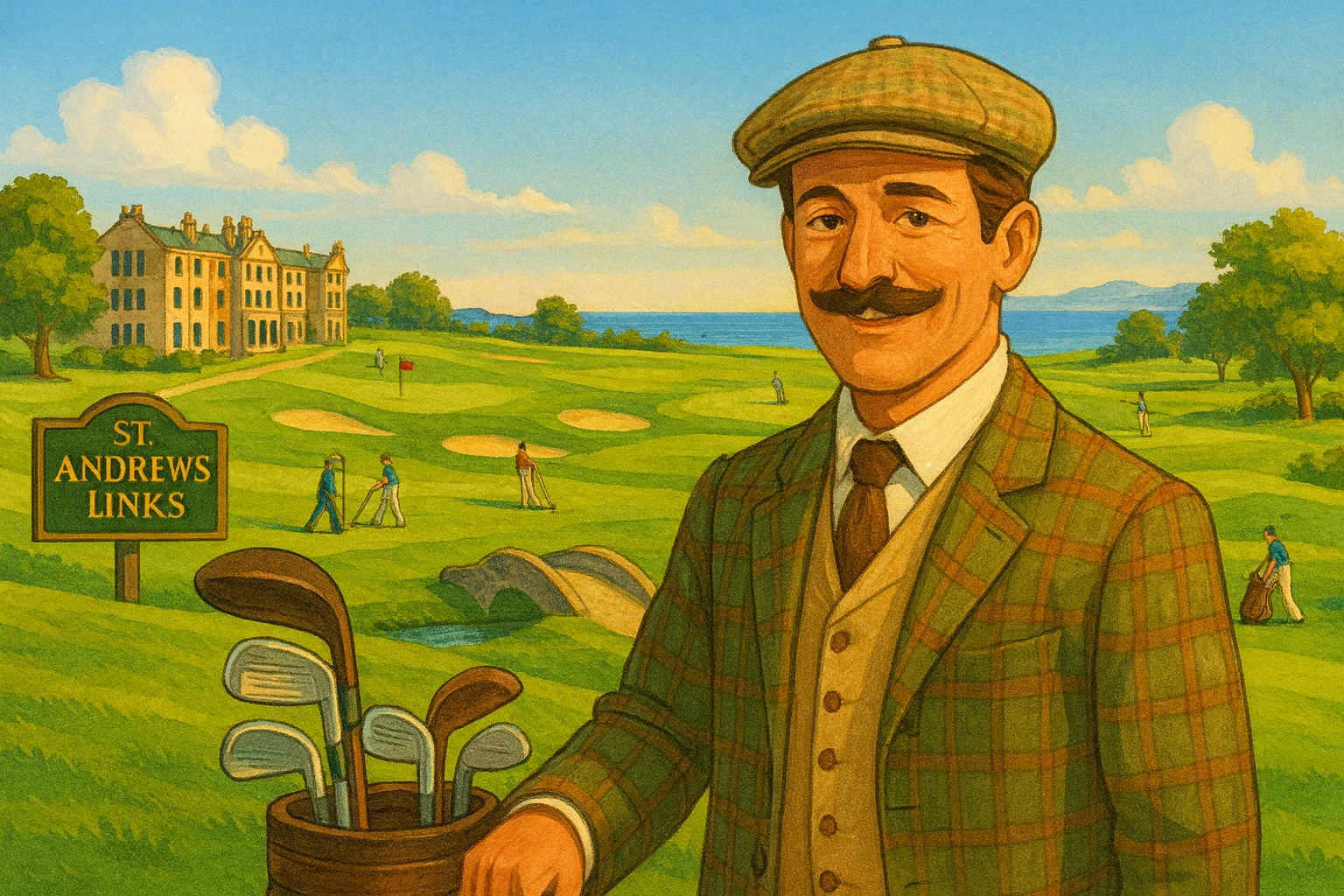
The origins of golf are often traced back to Scotland in the 15th century, where the game was played on coastal links—those sandy, wind-swept stretches between farmland and sea. Early versions were rustic compared to today’s manicured courses, but the essence was the same: strike a ball across natural terrain into a hole.
By 1744, formal rules were written, and the game began its journey toward becoming a global sport. From St. Andrews, often called the “home of golf,” the game spread throughout the British Isles and eventually across the world.
Today, courses exist in nearly every country, from windswept dunes in Ireland to desert layouts in Dubai. Yet no matter where it is played, the traditions of the game remain recognisable and respected.
The Golf Course
At the heart of golf is the course itself, a carefully designed landscape that blends natural beauty with strategic challenge. Most courses consist of 18 holes, though nine-hole layouts are also common.
Each hole is unique, beginning at a tee box, progressing along a fairway, and concluding on a smooth green where the hole is located. Along the way, players must navigate hazards such as sand bunkers, water features, and rough terrain.
Courses are often described in terms of their par—the number of strokes an expert golfer is expected to take. Holes typically fall into three categories:
- Par 3: Shorter holes where players aim to reach the green in one stroke.
- Par 4: The most common hole type, requiring two solid shots to reach the green.
- Par 5: Longer holes that test power and strategy, sometimes tempting players to reach the green in fewer shots—with added risk.
A round of golf is as much a walk through carefully crafted scenery as it is a competition. Trees, lakes, and rolling hills are not just obstacles but part of the beauty that makes each course unique.
The Equipment
Golf is distinctive in its reliance on specialised equipment, most notably the set of clubs. A golfer may carry up to 14 clubs during a round, each designed for specific distances and purposes.
- Driver & woods: Built for long shots and maximum distance from the tee or fairway.
- Irons: Used for controlled approach shots and varied lies.
- Wedges: Ideal for short, lofted approaches and shots around the green.
- Putter: Designed to roll the ball smoothly across the green.
Beyond the clubs, golfers rely on tees, balls, and accessories such as gloves and rangefinders. Modern technology refines equipment dramatically, yet the fundamentals remain unchanged: success depends not on the tools but on the skill and discipline of the player.
The Spirit of the Game
Unlike many sports, golf is not played with referees watching every move. Instead, it relies heavily on the honour system and the integrity of its participants.
Players are expected to know the rules, record their scores accurately, and show respect to the course and other competitors. Etiquette is central to golf’s culture and preserves both pace and enjoyment for all.
- Observe silence while another player prepares to hit.
- Avoid stepping on another player’s putting line.
- Rake bunkers and repair divots to maintain course conditions.
These traditions create a sense of mutual respect and elevate the game beyond competition alone. For a deeper primer, see golf etiquette.
The Mental and Strategic Dimension
To the casual observer, golf may appear slow or even simple. Yet those who play know it is one of the most mentally demanding sports, where focus and decision-making are as vital as physical skill.
Before each shot, a golfer weighs multiple factors:
- Distance, wind direction, and elevation.
- Hazards, safe landing areas, and green contours.
- Lie of the ball and the most forgiving target line.
Strategy plays a central role. Should one attempt a daring shot over water, or take the safer route around? Aim directly at the flag, or to the safer side of the green? These choices make every round unique.
Handicaps also help players of different abilities compete fairly—learn more in our overview of the handicap system.
The Social Side
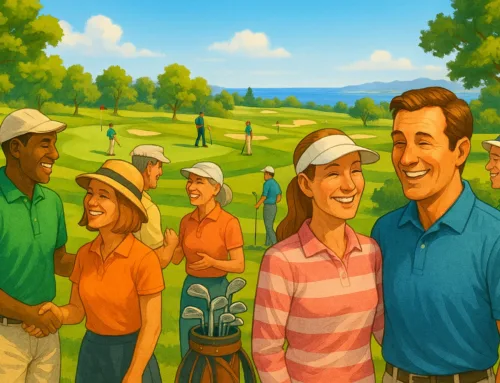
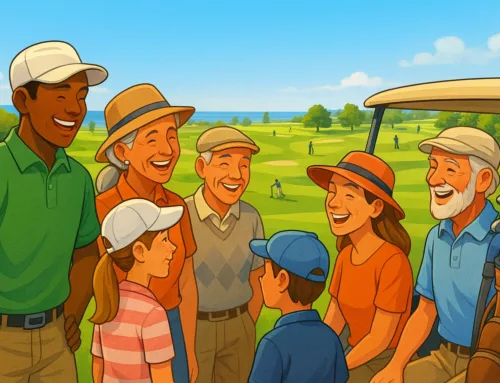
While golf can be played alone, it is most often enjoyed in groups. Few other sports allow players of widely different skill levels to compete together on relatively equal terms.
The leisurely pace encourages conversation and connection over several hours. Friendships form, and business can be discussed between shots—an experience as social as it is competitive.
The Global Game
Golf now enjoys a truly international presence. Prestigious tournaments such as The Masters, The Open Championship, and the Ryder Cup attract millions of viewers and celebrate skill, composure, and sportsmanship.
At the same time, the game remains accessible at the amateur level. Public courses, driving ranges, and short-course facilities make golf available to people of all ages and incomes.
Why Golf Endures
Golf’s timeless charm lies in its unique blend of qualities. It is at once challenging and relaxing, social and solitary, physical and mental.
It teaches patience, integrity, and humility, while offering moments of triumph and joy. For some, it is a lifelong pursuit of improvement; for others, a pleasant way to spend time outdoors. If you are just starting, explore our beginner’s guide for first steps and confidence on the course.
Few sports can be played well into one’s later years, but golf offers exactly that. Its moderate physical demands suit varying fitness levels, and its strategic depth keeps it endlessly interesting.
The game of golf is more than a pastime; it is a tradition, a discipline, and a community. From its humble beginnings on the Scottish coast to its global stature today, golf has endured because it embodies values that extend far beyond sport.
Respect, strategy, patience, and camaraderie all find a home on the fairways and greens. To play golf is to enter a centuries-old conversation between player, course, and game—one that offers something new with every round.