Why Golf Is Good for Your Health at Every Age
Golf is often thought of as a relaxing pastime—a sport for retirees or a way for professionals to network on weekends. But behind the calm pace and wide-open landscapes lies something much more powerful: golf benefits your body, mind, and social well-being at every stage of life. If you’re new to the game, you might also enjoy our beginner’s guide and these practical short-game tips for getting started the smart way.
Unlike high-intensity sports that can strain the body or lead to injuries, golf offers a low-impact, sustainable form of exercise that can be enjoyed by children, adults, and seniors alike. Add in the mental challenge, the social connections, and the natural settings where it’s played, and golf becomes more than a sport—it becomes a prescription for lifelong health.
In this article, we explore why playing golf is so good for your health at all ages, backed by science and real-world benefits. For a smooth experience on the course, don’t forget to review basic golf etiquette too.
Golf as a Low-Impact Workout
One of golf’s greatest advantages is its balance of exercise without excessive strain. The sport blends walking, controlled power, and coordination, supporting health over decades without punishing your joints.
- Walking the course: Most golfers walk between 4–8 km (2.5–5 miles) per round, boosting stamina and cardiovascular health.
- Swinging & mobility: The golf swing develops flexibility, balance, and coordination, especially in the hips, spine, and shoulders.
- Bone health: Walking is a weight-bearing activity that helps strengthen bones and lowers the risk of osteoporosis.
- Heart health: A full round can burn roughly 800–1,500 calories, supporting weight, cholesterol, and blood pressure management.
Key takeaway: Golf delivers a moderate-intensity, joint-friendly workout that you can maintain for life.
Mental Health and Cognitive Benefits
Golf isn’t just about muscles—it’s about the mind. The game requires focus, strategy, and patience, making it a workout for the brain as well.
- Stress relief: Time in green spaces helps lower cortisol, the body’s stress hormone.
- Mindfulness: Focusing on each swing and shot encourages being present, much like meditation.
- Brain stimulation: Planning shots and problem-solving keep cognitive functions sharp.
- Confidence: Small improvements on the course build self-esteem and resilience.
Research has found that golfers report better mental health and may enjoy lower mortality rates compared to non-golfers.
The Social Side of Golf
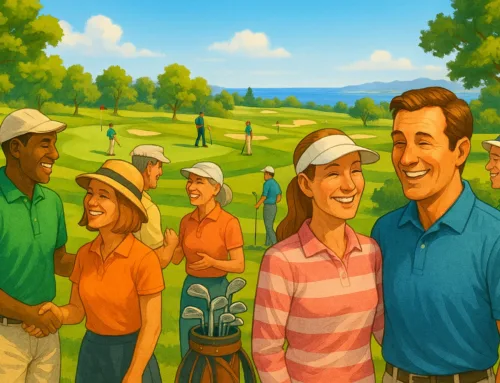
Golf is one of the most socially engaging sports you can play. Its natural pauses create space for conversation and connection.
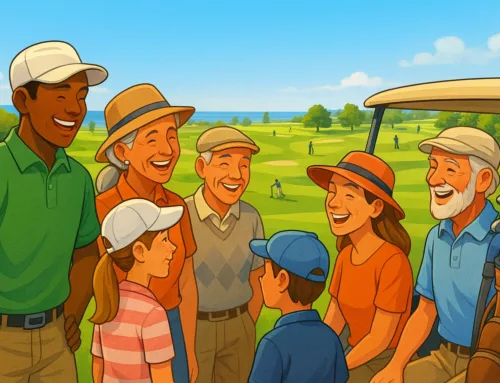
- Multi-generational play: Grandparents can play alongside grandchildren—a rarity in sports.
- Building relationships: Golf fosters friendships and networking in a relaxed setting.
- Team formats: Foursomes and scrambles encourage teamwork and camaraderie.
- Combating loneliness: Regular outings provide meaningful interaction, especially valuable for seniors.
The community element of golf is as valuable as the exercise itself—keeping people connected and mentally fulfilled.
Benefits of Golf at Different Life Stages
Children and Teens
- Improve hand–eye coordination and motor skills.
- Learn patience, discipline, and focus.
- Build confidence in a safe, low-risk sport.
- Develop healthy outdoor habits.
Adults (20s–50s)
- Manage work-related stress and boost mental clarity.
- Improve cardiovascular health and overall fitness.
- Build professional and personal networks.
- Maintain consistency in exercise routines.
Seniors (60+)
- Stay active with low-impact walking.
- Improve balance and flexibility, reducing fall risk.
- Keep the mind sharp with strategy and problem-solving.
- Enjoy meaningful social engagement and a sense of purpose.
Some studies suggest that golfers, on average, may live several years longer than non-golfers.
Golf and Longevity
Why does golf help people live longer? The sport combines multiple protective factors into one enjoyable habit.
- Consistent, moderate exercise supports heart and immune health.
- Vitamin D exposure strengthens bones and boosts mood.
- Cognitive activity reduces risks of mental decline.
- Social interaction lowers risks of depression and early mortality.
Golf combines all four—movement, sunlight, mental challenge, and human connection—into a single activity.
Accessibility for All Abilities
Unlike many sports, golf can be adapted to different physical abilities, making it truly inclusive.
- Golf carts increase access for players with mobility challenges.
- Adaptive clubs and grips support golfers with arthritis or limited grip strength.
- Short courses and par-3 layouts allow beginners and kids to ease in.
This inclusivity ensures that golf isn’t just for the athletic or the young—it’s a sport that anyone can play and keep playing.
A Lifestyle, Not Just a Sport
Golf fosters healthy habits that carry over into daily life, shaping a positive routine and mindset.
- Staying hydrated and spending time outdoors.
- Building patience, persistence, and problem-solving skills.
- Encouraging relaxation and stress management.
- Creating lifelong hobbies and friendships.
In many ways, golf isn’t just an activity—it becomes a positive lifestyle choice.
How Golf Compares to Other Sports
Why choose golf over alternatives like running, tennis, or cycling? Each has its place, but golf offers a unique mix.
- Low impact: Safer for joints and sustainable into older age.
- Social focus: Encourages friendships and community more than most solo sports.
- Mental challenge: Balances physical activity with strategy and mindfulness.
- Flexibility: Can be recreational or competitive, depending on your goals.
Golf is one of the rare sports you can start at 10 and still play at 90.
What Science Says
Research across multiple institutions supports golf’s benefits for both body and mind. Studies have associated golf with improved life expectancy, better mental health, and reduced risks of chronic disease. Time in nature is also linked with lower blood pressure, better moods, and improved overall well-being.
Conclusion: Golf as a Lifelong Prescription for Health
Golf is far more than a hobby—it’s a holistic wellness practice that supports physical health through low-impact exercise, mental health through mindfulness and challenge, social well-being through friendships and community, and longevity through active living and reduced health risks.
At any age, golf has something unique to offer. Whether you’re a child learning coordination, a professional managing stress, or a retiree keeping fit and social, golf can be the sport that grows with you.
Ready to Get Started?